
Suikoden's Back
Suikoden I & II HD Remaster: Gate Rune and Dunan Unification Wars is an inconsistent remaster of two genuine classics


When Suikoden hit the scene in the mid-90s, it provided a dose of sweeping, politically-charged storytelling that immediately set itself apart from similar games, and taught a whole lot of Millennial teenagers about war and how it touches all corners of society. For a decade, spanning five mainline titles, the Suikoden franchise established an effective overarching story across multiple consoles. Though it struggled to move its story forward chronologically after the departure of its creator, the late Yoshitaka Murayama, some of its later titles, specifically Suikoden II, III, and V, are regularly counted among the best console RPGs of all time by many fans and critics.
After the success of Rabbit & Bear's Kickstarter for Eiyuden Chronicle: Hundred Heroes—a surprise spiritual successor from the original creators of Suikoden, including Murayama and longtime creative partner Junko Kawano—it was a bit of a surprise to see Konami announce a full HD remaster of Suikoden and Suikoden 2 in 2022 considering they'd let the series lie fallow for over a decade. And, not just a slapdash remaster meant to quell fans asking for the games to be made available on modern consoles, like GungHo's smeary Grandia HD or Square Enix's abysmal remaster of Chrono Cross, Konami appeared to be doing so at a scale to match Square Enix's efforts with the Final Fantasy Pixel Remaster series, which (outside of dubious typography) were terrific modernizations of the first six games in that series.
After a handful of delays and a year of radio silence where many fans feared the remasters might've been quietly canceled, Suikoden I & II HD Remaster: Gate Rune and Dunan Unification Wars's here, and everything that made Suikoden and Suikoden II great are preserved and made accessible for fans and a new audience for the first time in years. Blazing fast gameplay, a startlingly huge cast of recruitable characters (108 in each game), beautiful music, and a layered, multifaceted narrative approach define these remasters, just as they defined the original releases.
If you want to know why these games are so special in the first place, I've got more on that coming. But what about these remasters specifically? Have they done enough to revitalize a beloved series left for dead? Or is it a warmed over corpse destined for a second burial?
New vs. Old
In modernizing a classic, it's vital to preserve the essence of the original—the parts that make it special and unique—while recognizing where improvements can be made to make the game more palatable by modern standards. In many ways, Suikoden HD threads this needle, but, especially with the first title, errs a bit too heavily on small-c conservative preservation over player-friendly optimization.
Longtime fans will immediately notice the "HD" graphics (which, at this point, we're far enough into the 4K era to make that moniker as useful as "technicolor") which produce slavish recreations of the gorgeous pixel art from the original titles. On first glance, the results are pleasing, if not as groundbreaking as other recent retro revival RPGs like Sea of Stars or Chained Echoes, as they're illustrated and tiled, rather than bespoke pixel art to match the character sprites. But it quickly becomes apparent that the results are mixed, with the best of the new graphics coming in Suikoden II thanks to its more complex and detailed environments which allow bespoke, non-tiled elements to shine. Things fall apart, though, with Suikoden's simpler environments and heavy reliance on tiled backgrounds.
Take these screenshots, two from each game, for example:
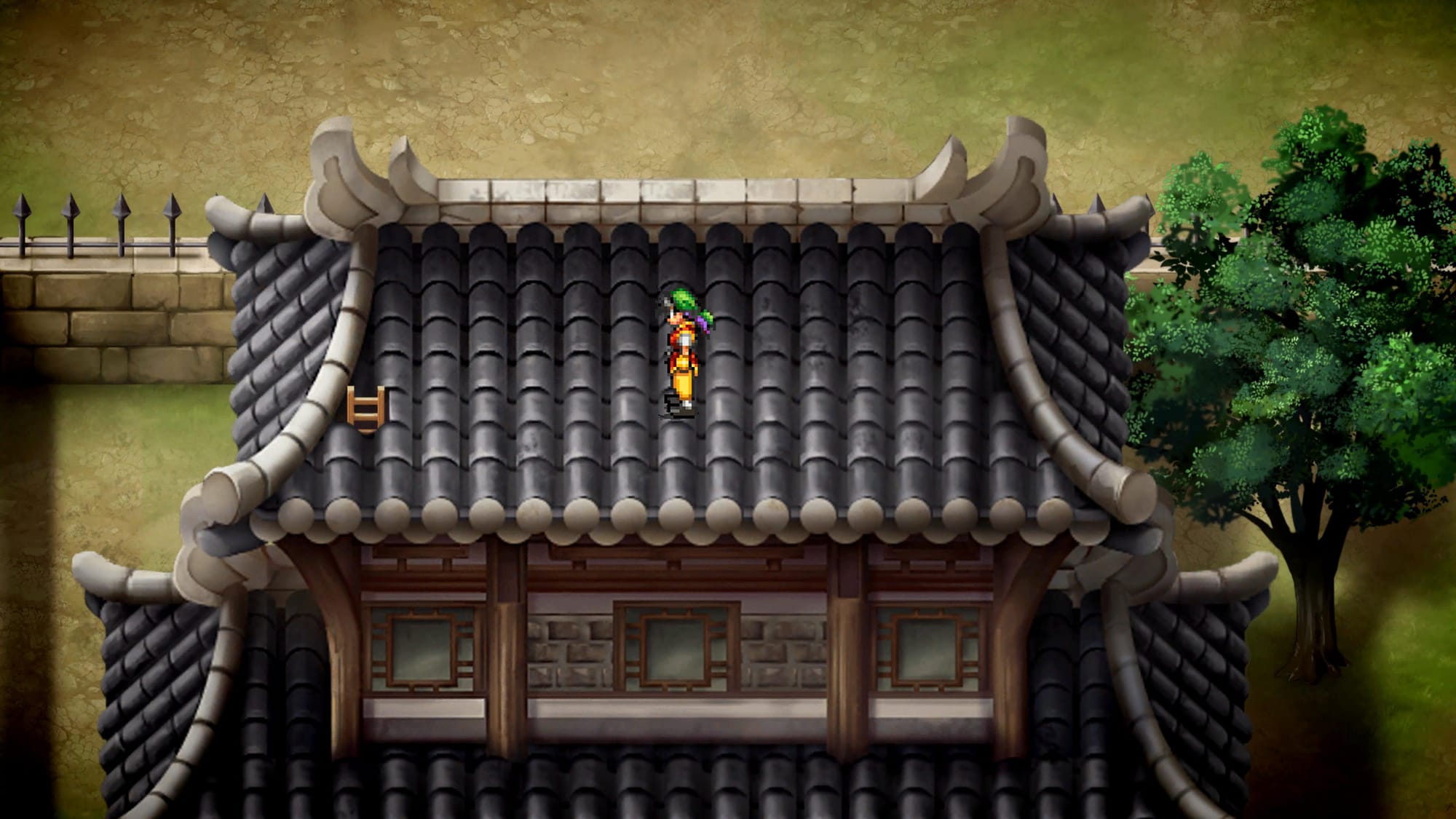
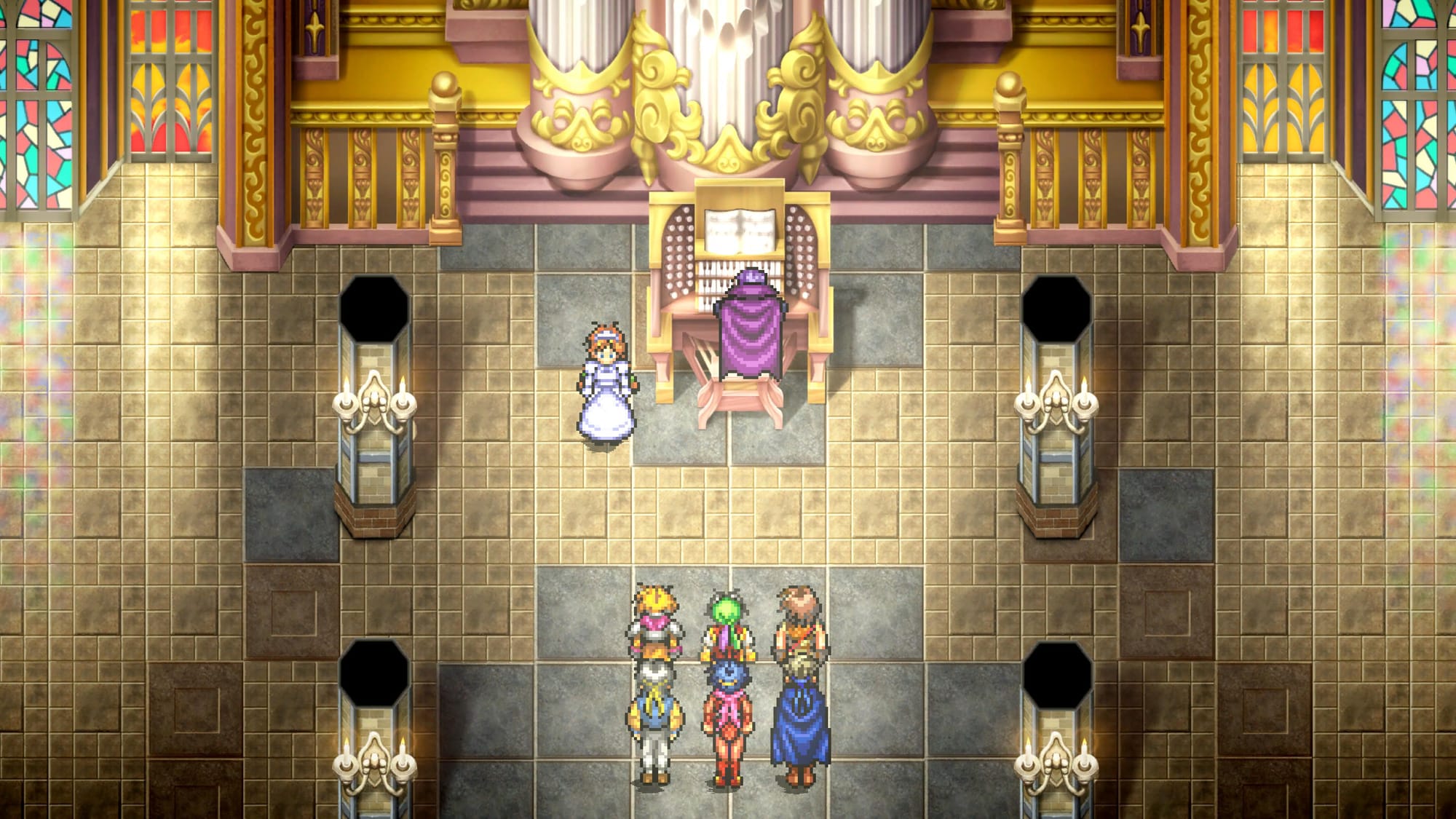
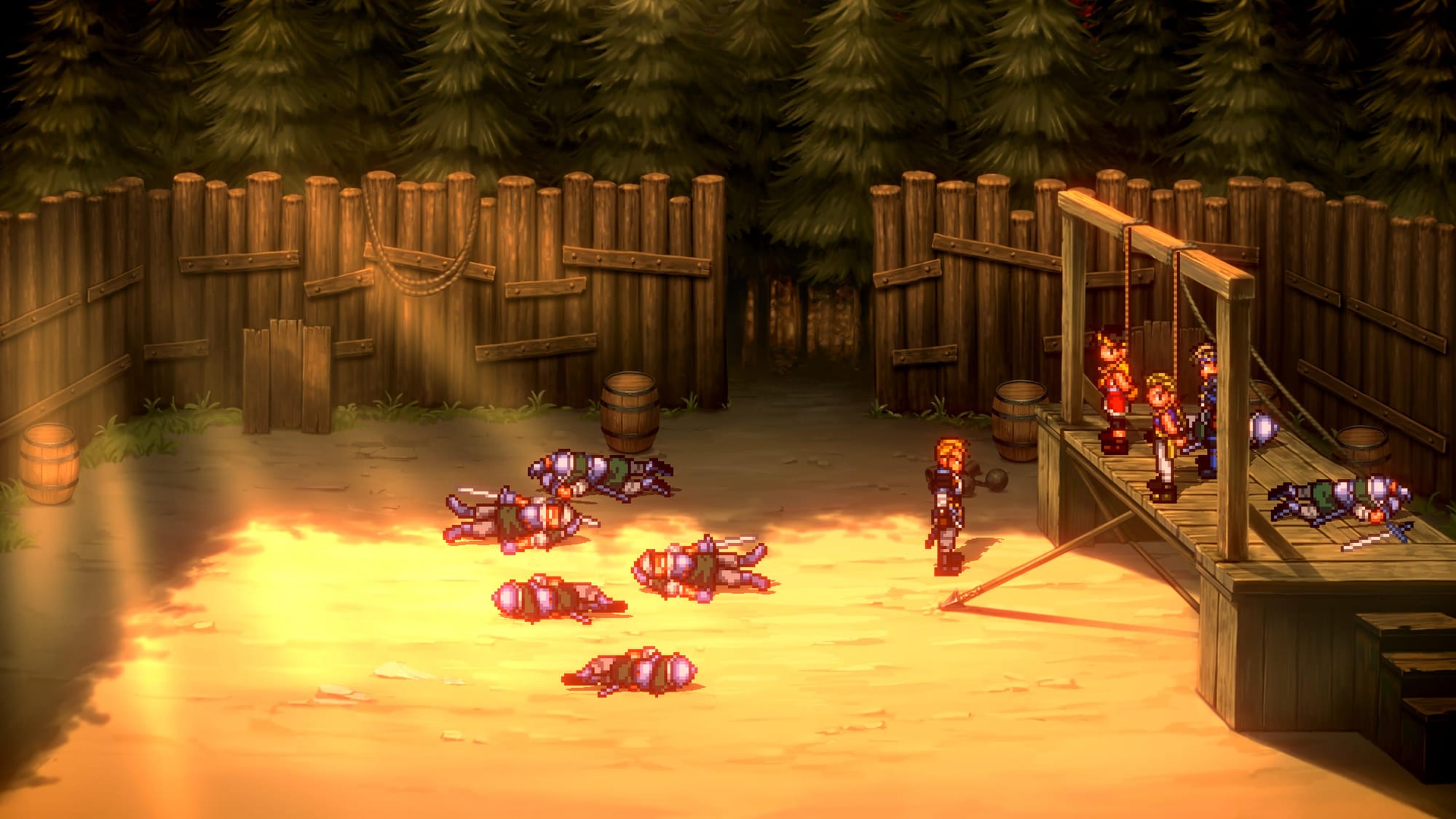
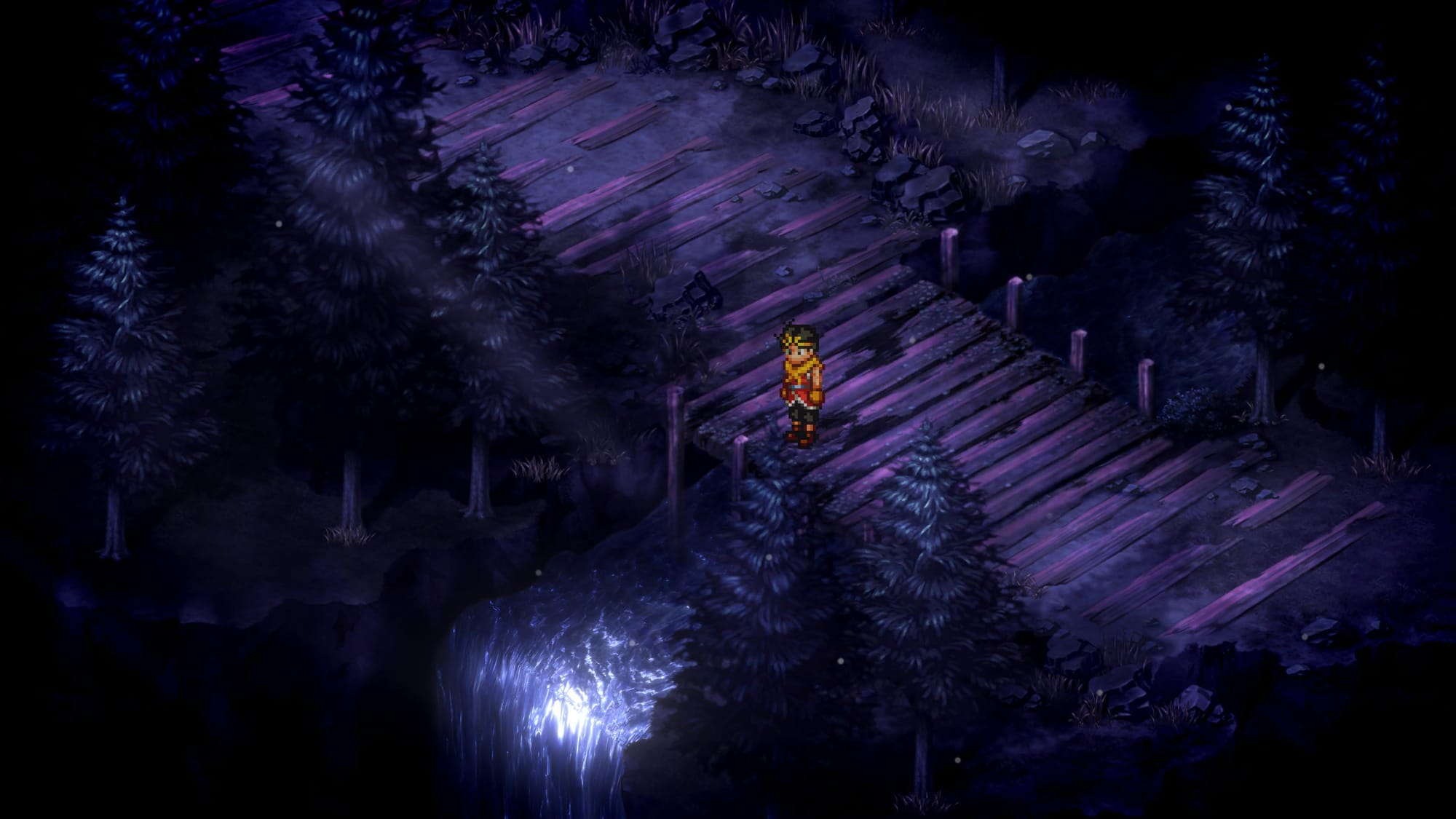
Top: Suikoden | Bottom: Suikoden II
The overly clean, Photoshop-y look of the new artwork feels sterile and uncanny in Suikoden, often looking like an RPGMaker recreation of the game using generic tilesets that vaguely resemble the original game. Suikoden on PlayStation made heavy use of tiles, too, and often suffered from similar problems compared to its sequel—so the team didn't have as much to work with here—but the qualities of pixel art on CRT displays gave a texture to the world and graphics that helped the environments feel more natural and lived in compared to the glossy museum-exhibition feel of the remaster.
Even in this closer one-to-one comparison of cleaner, tile-based urban environments shows the clear upgrade in complexity and canniness:
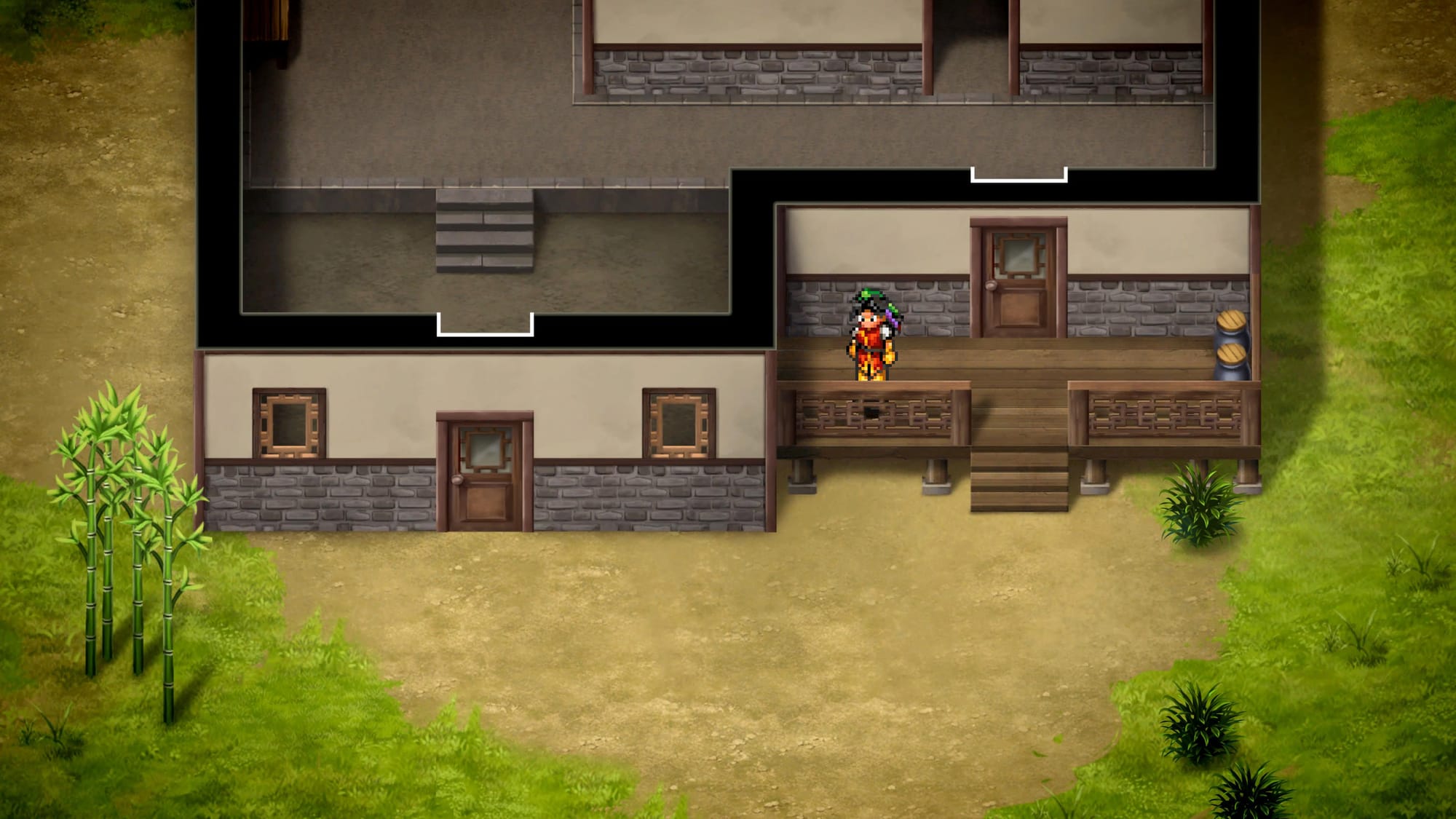
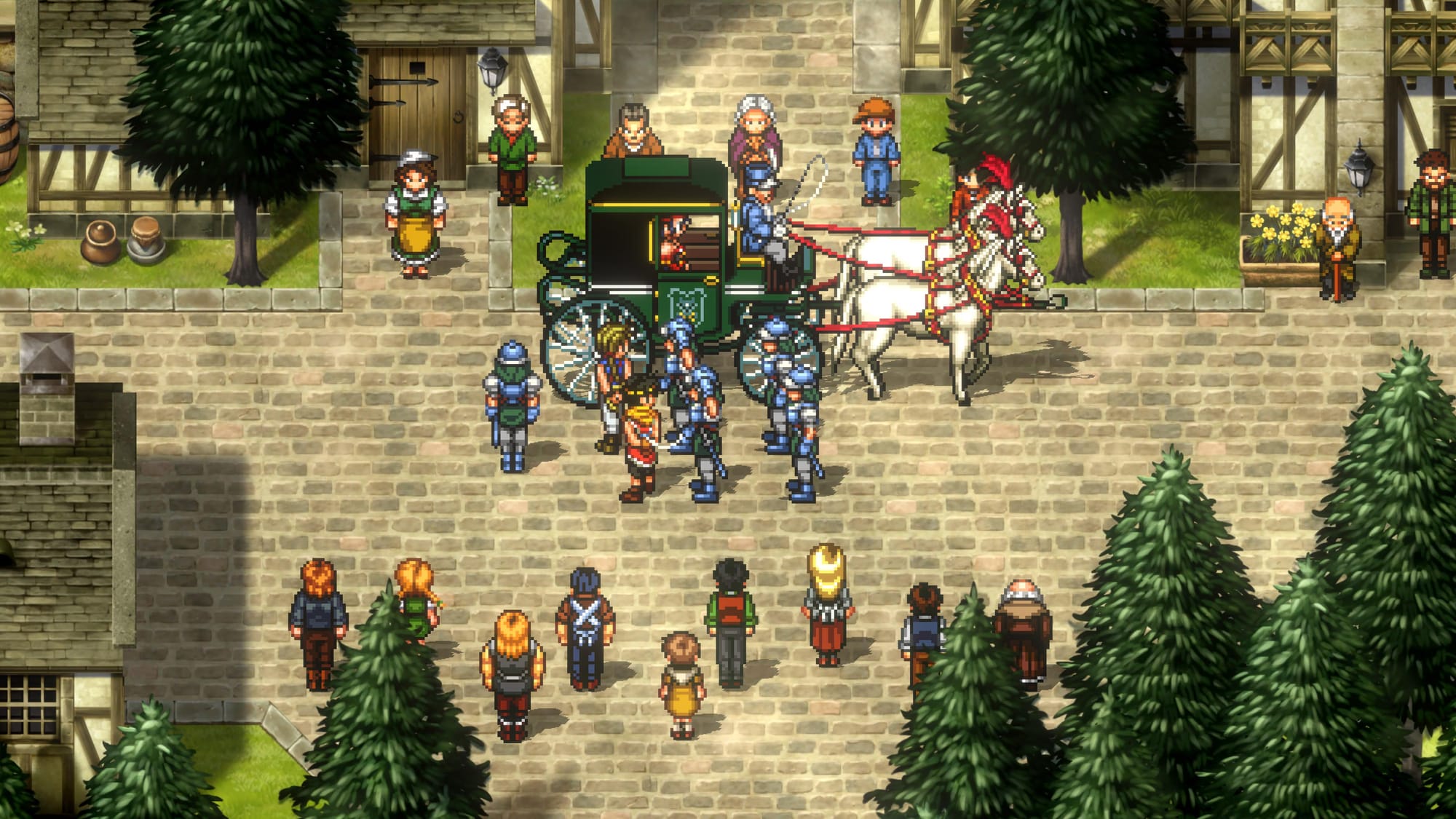
Left: Suikoden | Right: Suikoden II
Ultimately, I walked away feeling impressed by Suikoden HD's handling of the higher fidelity graphics when they worked well—predominantly in scenes and environments that relied on bespoke, hand-illustrated backgrounds used frequently in Suikoden II and sparingly in Suikoden—and wishing for more when it came to tiled environments. In an ideal world, we would've seen Suikoden reworked to improve its environments to Suikoden II's level, but, instead, Konami chose rigid preservation of the original.
The same can be said of the new localization. The original Suikoden's localization has always been fine. Unremarkable and bland, but, considering the state of localization pre-Richard Honeywood and Alexander O. Smith, it at least didn't get in the way of the game experience. Suikoden II, despite being handled by a team headed by the tremendously talented Jeremy Blaustein—best known at the time for his single-handed localization of Metal Gear Solid—features a famously busted localization rife with spelling issues, an overabundance of exclamation marks, untranslated text, and names that switch spellings at various points throughout the game. It's a black mark on an otherwise classic game and a testament to Suikoden II's overall quality that it was able to gain its reputation despite this localization.
So, like many, I saw these remasters as an opportunity for Konami to give Suikoden and (especially) II a localization matching the quality of the rest of the game. What we've got, however, are remasters of the original scripts, rather than from-the-ground-up relocalizations of the original Japanese scripts passed through 25+ years of improved techniques and experiences. They've obviously gone through a polish and punch-up pass, so they're no longer actively hurting the game (especially in Suikoden II's case), but much of the original text still exists in these new scripts, and the improvements have only raised the English scripts to "bland and passable." In a post-Final Fantasy 16 and Elden Ring world, or, heck, a post-Vagrant Story world, Suikoden deserves better.
Continuing the trend of stopping a few bucks short, Suikoden HD features a few nice quality-of-life improvements such as automatic running and a new bag to hold key items in Suikoden, but the omission of several obvious improvements is glaring. None of Suikoden II's inventory management improvements were backported to the first game, nor were other features like the ability to rearrange your combat team when a new member joins or the ability to automatically equip new items from the shop menu (and sell back the old gear). But, even if you don't think Suikoden II features and UI should be backported, the implementation of other expected QoL features is sorely lacking. The new "autosave" system touted in prerelease materials is laughably inadequate: Instead of an actual autosave feature, the games will only autosave when you enter a new screen… that features a save point. Considering there's only a handful of these in Suikoden, a dozen at most, this feature rarely fires, and does very little to actually serve its purpose. Most of the time the game will autosave and then you'll take three seconds to run to the save point to properly save. Couple this with a lack of a quicksave or manual save anywhere feature, and you're stuck with a very old school play pattern of having to play until you find a save spot if you want to switch games. I lost progress multiple times when my daughter wanted to play something different and switched PS5 profiles.
In all, it reads as a project that was more dedicated to one-to-one preservation over meaningful modernization, and, though I can see the appeal, as someone with access to the originals, I'd have liked to have seen more effort put into improving Suikoden's tilework, fully reworked localizations, and standard QoL features across the board to make these versions of the game not only accessible, but free of the unflattering friction leftover from an era of game design that hadn't sorted these basic features out from the chaff. A few different choices and a bit more budget could've resulted in unimpeachable best-in-class versions of these games.
Let's Play Suikoden
Outside of the graphics and QoL changes, the remasters feature beautifully reorchestrated music—a major strength of the PlayStation original's and even better here—and Suikoden's new portraits, redrawn by original artist Junko Kawano, are stunning. Despite the inconsistencies above, it's clear there was a lot of love and attention directed at these remasters, and it shows in many of the details that would've otherwise been easy to just phone in. (For example, Suikoden II features upscaled character portraits that look far less pleasant than the redrawn portraits for Suikoden, just further illustrating the quality of Kawano's work in the first game.) This gives me hope for the future of the series.
With the recent announcement of a new Suikoden mobile game, an anime adaptation, and even a stage play, the future of the series feels remarkably volatile and alive in a way it hasn't in decades. Is this the start of a new era for the series off the backs of the remasters and the mobile game? Or a blip in its history before Konami forgets about it again. With the success of Falcom's Trails series, I think the time is right for Suikoden to return to the fold, and there's a perfect blueprint for what a modern, politically-driven RPG series with a plot unfolding across multiple titles looks like.
Suikoden and its sequel remain some of the best examples of golden age console RPGs, and these remasters are earnest in their attempts to recapture that magic.
Remasters are above all about modernizing and improving the original experience, but they're also about accessibility and opening a door for lapsed and new fans to discover why the originals are so beloved in the first place. Not everyone can open the jewel case and pop their copies of Suikoden and Suikoden II into a PlayStation and fire them up on an era-appropriate CRT display like I can—so the question begs: Are these remasters enough to convince newcomers of the series's classic reputation? Are they enough to breathe life into the future of the series?
Though I have my quibbles with the details, these are high quality remasters of two classic games, and an excellent introduction to the series for newcomers. With snappy combat, a million memorable characters, terrific opportunities for player agency, nicely remastered graphics in Suikoden II, and many narrative themes and gameplay systems that still stand out today, Suikoden and its sequel remain some of the best examples of golden age console RPGs, and these remasters are earnest in their attempts to recapture that magic.
Are they enough to replace the originals as my go-to when I want a replay? Much to my surprise, yes. Though if I could get these cleaned up scripts patched into the PlayStation originals... I might change my mind.
Support
There are lots of ways to support Astrolabe and my other work. Check ‘em out!
Keep In Touch
Enjoy Astrolabe? Want more SFF and retro gaming goodies? You can find me on Bluesky and my website.
Credits
Astrolabe banner photo by Shot by Cerqueira on Unsplash