
What makes a great console RPG story?
Let's explore how Japanese RPGs and their descendants explore narrative through player agency and investment

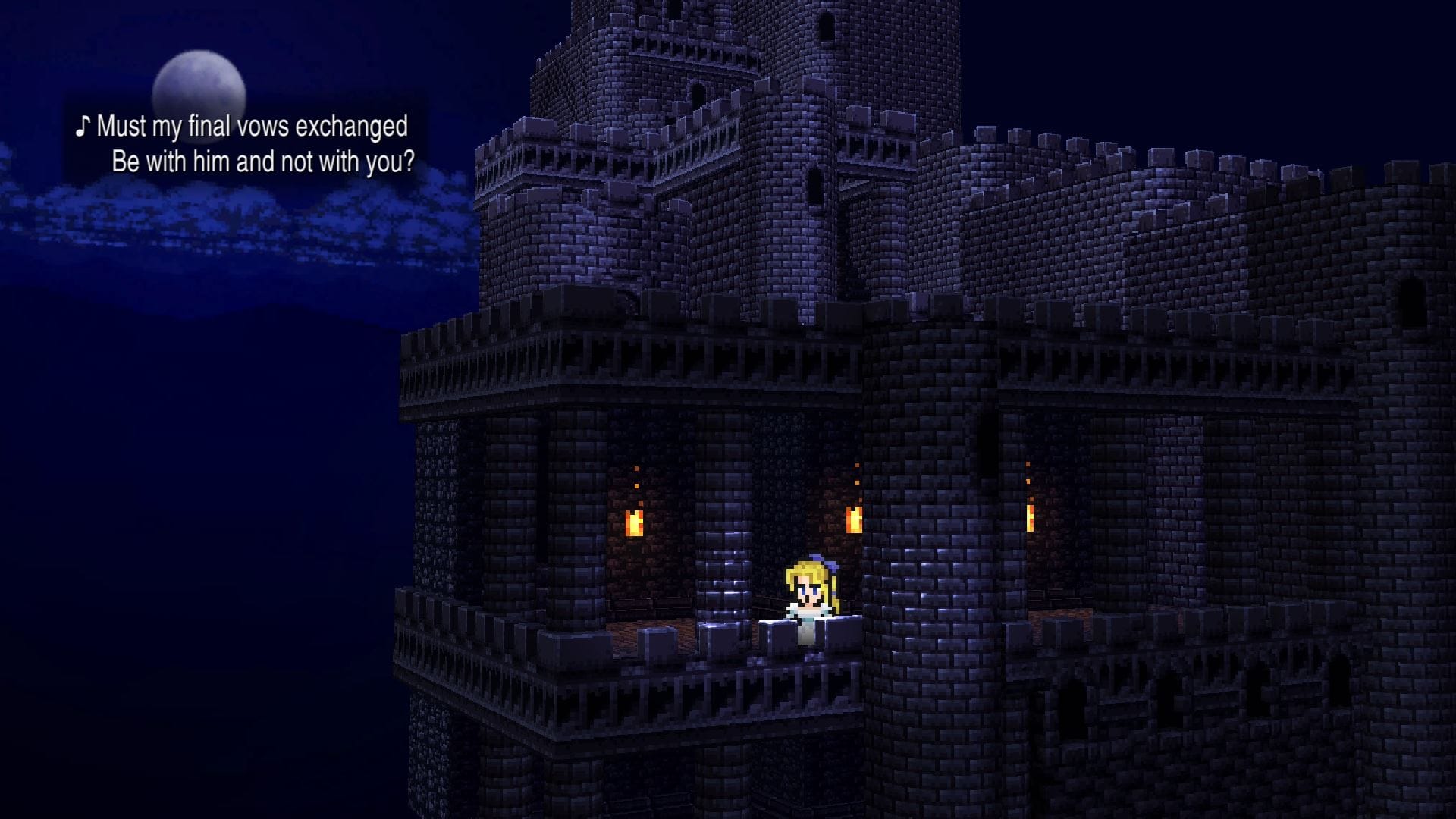
From The Odyssey to Pokemon, Opera Scenes, and Sad Robots
As a fiction writer, I’m fascinated by the way stories change as they move between creative mediums. There’s good reason you can’t make a Lord of the Rings game that lifts the exact narrative from Tolkien’s book, or a frame-perfect recreation of Star Wars: A New Hope as a video game. Those mediums use narrative and structural carrots to draw people through the experience, and video games require an active player with agency within the game world. Even if you have a linear narrative equivalent to a theme park ride, the player still needs to feel like the choices they're making–no matter how large or small–are consequential. They still have to click the clicks, and move the thumbstick. Console RPGs—particularly those from the 16- and 32-bit golden age that I covered in my book, Fight, Magic, Items—emphasize a merging of linear storytelling with player agency in a way that’s unique to video games.
Often narrative-heavy experiences, console RPGs immerse the player in an interactive experience, which requires a new way of thinking about narrative, player engagement, and their own agency. Though many other genres merge gameplay and narrative, there’s something special about console RPGs in the mold of those created by Hironobu Sakaguchi (Final Fantasy) and Yuji Horii (Dragon Quest), said Emma Mieko Candon, author of Star Wars Visions: Ronin. “In terms of gaming motivation, I’m strongly driven by narrative/immersion, with touches of exploration, mastery, and action," Candon explained. "JRPGs satisfy these motivations in a way no western RPG has quite yet managed to capture. Bioware has come closest, but I’m still waiting for something that makes me as ecstatic as a quality JRPG!”
(In this piece, we'll be using "JRPG" to as shorthand to describe the subgenre of console RPGs made by Japanese creators and spurred to popularity by Final Fantasy and Dragon Quest in the 80s. Later in the piece, we'll speak with a western creator making what he calls a "neo-JRPG".) Kazuma Hashimoto has a great piece on Polygon explaining the complexities and baggage of the term.)
 Kazuma Hashimoto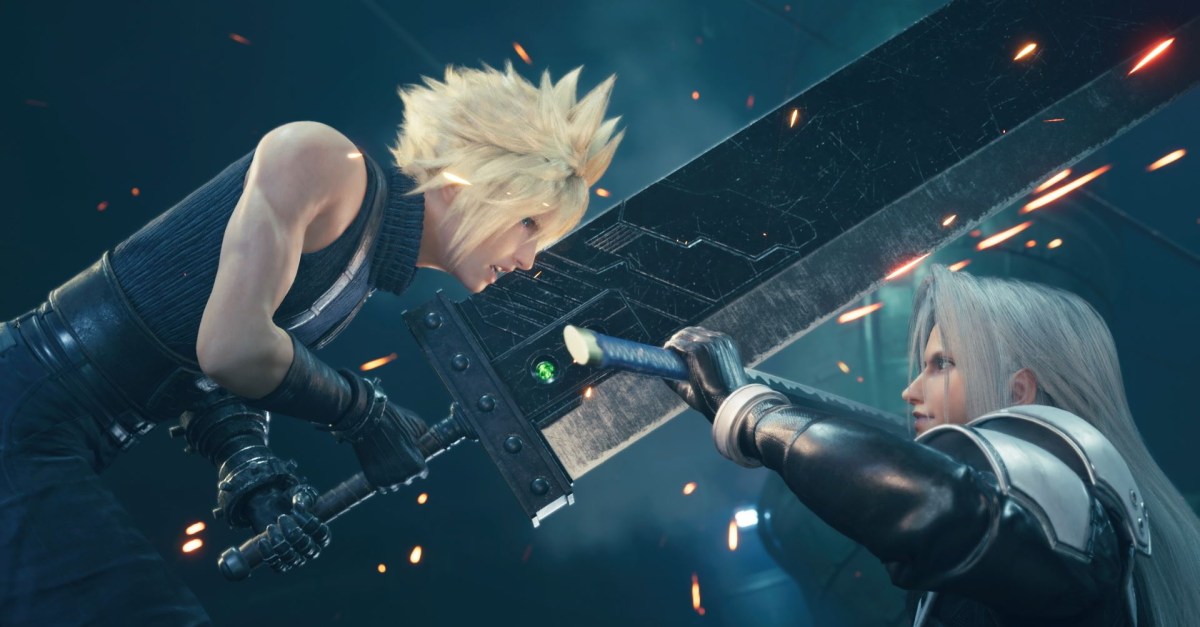
So, what is it? Why have these stories from Soraya Saga, Rieko Kodama, Masato Kato, and Hironobu Sakaguchi gathered so many fans? What sets them apart from their inspirations? And how does the way they tell stories create narrative opportunities that don't exist anywhere else?
So, what makes a good console RPG story, and how are they different than, say, the epic fantasy novels or tabletop RPG campaigns that initially inspired them decades ago? In “How Japanese RPGs Inspired A New Generation Of Fantasy Authors”, I proved the connection between Japanese console RPGs and a crop of modern writers who grew up as inspired by the works of Hironobu Sakaguchi and Yuji Horii as they were by J.R.R. Tolkien and Ursula K. Le Guin. Back when I was writing my book, I spoke with authors Louisa Atto, Yudhanjaya Wijeratne, and Candon, and, through the perspective of novelists who are also big RPG fans, they helped me understand the nuance of what makes console RPG narratives so effective.
“As a kid, JRPGs really symbolized the height of storytelling for me,” Atto told me. “Here were games that weren’t only immersive with graphics and sound, but with narrative and character, and it really helped inform my holistic view of storytelling. These games really showed me that creating stories is about paying attention to things like mood and tone and progression and character; that all of these things combined create a strong narrative.”
A games writer, Atto also publishes fiction as Louisa Onomé, and she says series like Final Fantasy influenced her work—despite writing outside the genres usually associated with video games. “Even though many often associate liking games with writing genre fiction, I actually write majority contemporary fiction,” Atto said. Though she's not the biggest genre reader, sci-fi and fantasy games are a different story. “I love the immersion that comes from these genres. There’s just something about the visuals and the music that pulls it all together.”
“They’re able to feel extraordinarily expansive and intricate,” added Candon, “kind of like getting the whole of Lord of the Rings and its apocrypha or the extended Star Wars universe distilled into a single entry. Every little thing, from a random NPC to an item to a monster, might get spun out into another whole arm of the story. They’re also entirely comfortable with letting their characters be goofy as hell, which I always appreciate as contrast to their tendency toward high melodrama.”
Like myself, Candon and Atto fell in love with JRPGs thanks to series like Final Fantasy and Kingdom Hearts, and their unique style of storytelling became a major influence on the authors' later work.
“They arrived in my life at about the same time I started taking writing seriously, so I was studying their narrative structures from the start,” Candon said. “JRPGs and anime share a philosophical ambition—they like waxing poetic about raison d’être and whatever, but too often it ends up feeling like surreal wallpaper more than an exquisitely executed theme.
"I think that’s one reason Yoko Taro’s work stands out to me; he grabs meta by the horns and doesn’t let go. This is all particularly important for me to study, because I am a pretentious little bean, and I will try to get away with all kinds of nonsense if I don’t learn to properly weave my thoughts into my feelings.”
“Art can’t exist separate from the culture it was created in,” Atto explained. “Coming from a Western background, a lot of our RPGs naturally reflect a predominantly Western way of thinking. But I find JRPGs automatically carry a very Eastern or Japanese viewpoint, because that’s where these games and stories were made, so elements of the culture can’t help but be present in the narrative’s foundation. I appreciate it because the approach to subject matter is then viewed from an entirely different perspective, which gives a greater opportunity for characters, relationships, or themes we may not always see in Western RPGs or stories.”
“JRPGs gave me a love of characters and worlds that wear their hearts on their sleeves,” said Yudhanjaya Wijeratne. “A lot of what I know of worldbuilding came from JRPGs, not from books on writing; those came later. From JRPGs I learned to ask questions like ‘What is this place about? What should it feel like? What do the people do? What do they feel? What are their stories?’ Because, as everyone knows, the NPCs are a huge part of the world of a JRPG, and their conversational snippets are often how you learn about the world at large.”
Wijeratne came to JRPGs late and out of sequence, he told me. “For the longest time, in our house, entertainment was either a book or a succession of ‘TV games’ – knockoff consoles that usually had a keyboard, a controller, and played games that came in cartridges. Come to think of it, I think many of them were knockoff Super Nintendos; all I knew was that we had like four different versions of Super Mario, any number of Contra. So my mental map of things were: if you wanted story, books. If you wanted an hour of skilled but mindless distraction, well, games.
“So imagine my surprise when I got a secondhand PC and came across the setup files for the Final Fantasy VII. Whoever had owned it previously had burned a bunch of disc images, stuck them in a ‘New folder’ inside the C:\ drive and forgotten to wipe the disc. To say I was stunned is an understatement. Here was a story! And not just any story; one brimming with an aesthetic I’d never seen before, an entire world I could explore, and a story I could actually react to!”
A celebrated SFF writer and data scientist from Ratnapura, Sri Lanka, Wijeratne now splits his time between writing books and games.
If epic fantasy novels are like a window into another possibility, JRPGs are a portal that pulls you right through and plunks you in a world where you can feel the grass between your toes, the wind in your hair, and the responsibility to save the world heavy on your soldiers.
“I will always love a JRPG that can take something small and turn it into an expansive human story,” said Atto when I asked what separates great JRPG stories from the field. “So many of my favourite games do this by focusing on the humanity of each character and linking their specific plight to the larger narrative.”
I asked Atto to pick a favourite scene in a game, and after some thought, she responded with a game that would be right near the top of my list: Final Fantasy XII for the PlayStation 2. “One thing I love is how it portrays its antagonist Vayne Solidor’s descent into madness,” she continued. “It’s so layered and gritty, and in my opinion, perfectly executed. You start the game seeing Vayne as a regular aristocrat who appears to want to bring peace to the nation state his empire rules over. But as the game goes on, through expert dialogue and the actor’s amazing portrayal, the underside of Vayne’s personality shifts, you see how he becomes corrupted (or how he’s always been corrupted), and the player watches him transform into a really formidable villain.”
One of the things I personally like about JRPG storytelling is the way they often set their well-defined cast of characters on a relatively linear plot path—very similar to the novels I love reading—but provide agency within the story for the player via combat and character building systems. This attribute is shared between western RPGs and their Japanese counterparts, but the execution is where separation exists. As western and Japanese RPGs diverged in the 80s, titles like Ultima and BioWare’s Baldur’s Gate became more “diffuse,” Pat Holleman explained. Holleman is the director of Quartet—a multiplatform “neo-JRPG” that he described to me as “Final Fantasy VI for grownups.” An American, he was one of millions who grew up during the 90s golden age of JRPGs.
In addition to his work on Quartet, Holleman is the author of many books on game narrative and design—a process he considers a necessary component on his journey as a games writer. While researching those books, Holleman closely examined games narratives in western and Japanese RPGs, seeking to understand how they diverged from their common inspiration of western tabletop RPGs.
“All of the early console RPGs had to use extreme strategies to deal with the fact that Dungeons & Dragons can’t fit on a game console,” he explained, referencing Horii and Sakaguchi’s efforts to bring the tabletop RPG juggernaut to the NES the 80s. It’s getting better now, he continued, but still presents a series of compromises—which is where most Japanese and western designers diverged. So, back then, we got things like Rogue on the PC, which stripped down the Dungeons & Dragons experience to focus on character building, but not much narrative. “Then you had Dragon Quest and Final Fantasy, which were small snippets of the Dungeons & Dragons formula,” and a focus on linear narrative over what Holleman referred to as the “diffuse” elements popular in western RPGs that emphasized freedom within the narrative. It’s all about focus and balancing those compromises.
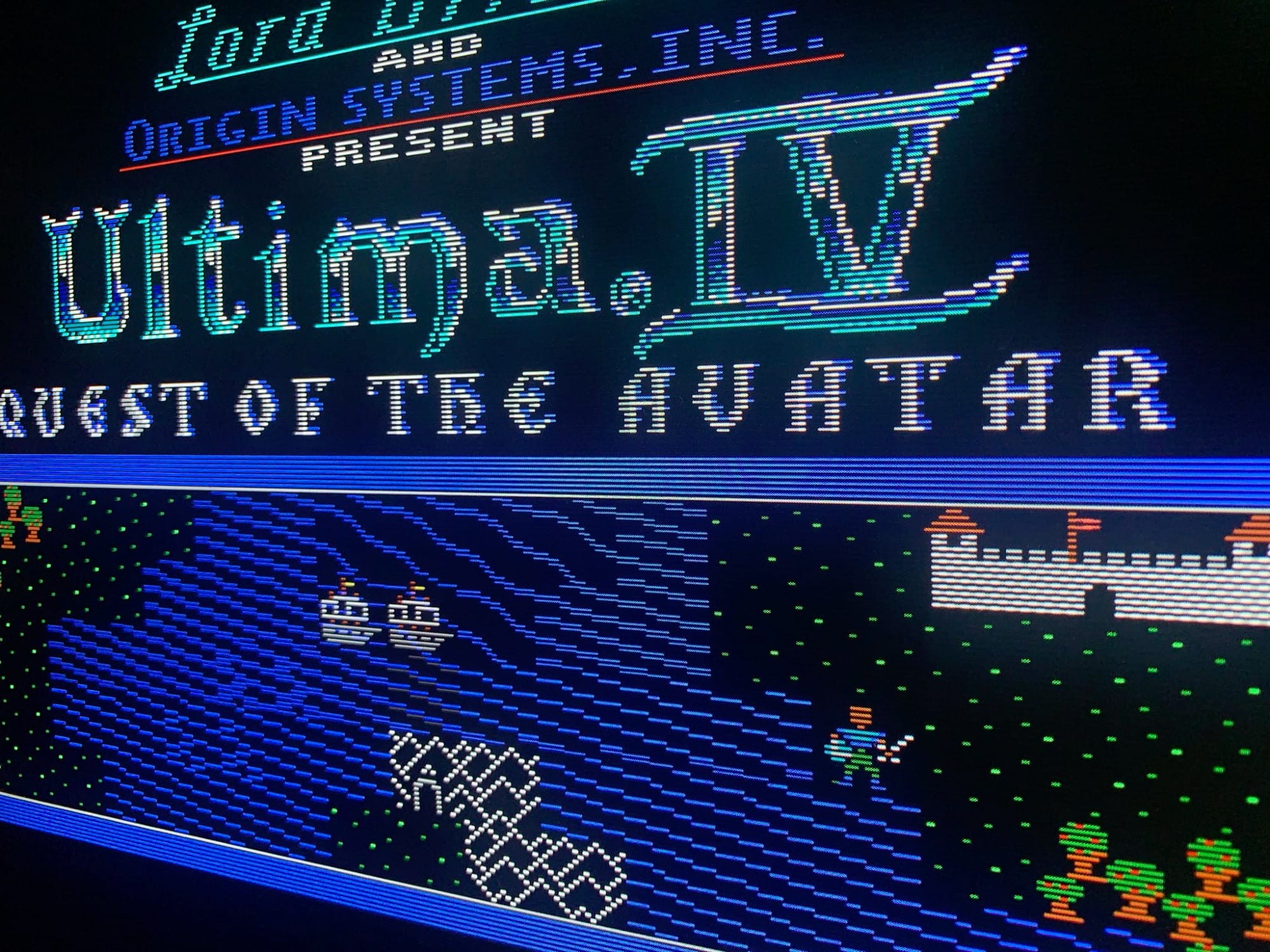
“The Ultima series, for example, gave you lots of choices—but combat was very rudimentary, the world was ugly, and the user interface was tough to use. But that was because in order to put as much of the Dungeons & Dragons as they wanted, they had to make a lot of compromises.”
Nowadays, triple-A games like Final Fantasy XVI boast enormous budgets, hugely powerful hardware, and enormous creative teams, which means effectively no compromises. While this sounds freeing, Holleman says there’s value in the technical and budgetary restraints faced by indie developers like himself.
“We're still making compromises,” he said, but we're doing them willingly. We understand self consciously that “Hey, a JRPG is the child of a compromise.” Which is to say that we have to throw away the diffuse aspects of the Western tabletop tradition, and just focus on a linear storyline. But that's what matters to us. So we're willing to make that compromise when starting the project."
The trouble, according to Holleman, is that the amount of training required to understand game narrative design and writing is a lot higher than most people think, and difficult to acquire.
“I think the amount of training that exists in university level for game design and game storytelling is just woefully insufficient,” he told me. It’s not that the quality of the instruction, he continued, but that it requires more than a four year degree program to get games writers where they need to be to start their career. “A masters’s degree,” he finished, “that's the starting point.”
But, when you look back on the creators of the genre—or even their western counterparts like Josh Sawyer, who rose to fame for designing Fallout: New Vegas, which is widely considered one of the best western RPGs of all time—they all got their start in tabletop RPGs and computer games. The commonality is that whether someone holds a master’s in game design or spent their 10,000 hours playing Dungeons & Dragons, the ability to write high quality game narratives that satisfy the player’s desire for both a good story and a sense of agency requires a lot of experience.
Vayne Solidor’s descent into madness is just one example of how JRPGs use linear narratives to pull the reader through the story. Choice is often ephemeral—rarely resulting in meaningful change by the end of the game—but the illusion exists in a way that allows the reader to feel like they’re an active protagonist. As Vayne heel turns, the player must make an active effort to become stronger, a race against a running plot to stop the madness that the player—not just the game’s writers—propels forward through their actions. It’s active storytelling, but in a different manner than that found in the more diffuse Western RPG and tabletop RPG mediums—the effort is to turn the page, rather than define what happens on the next page.
It's agency within a fixed structure. By providing the linear storytelling of a novel with the interactive elements first dreamed up by tabletop RPG creators, JRPGs balance on that razor-thin blade between the diffuseness of western RPGs and the on-rails narrative theme park ride of novels. When they come together perfectly—as they do in so many of the genre's most beloved games—it’s a unique experience that promises to keep the player on a finely-honed narrative rollercoaster where they feel like they're determining what happens around the next bend.
Support
There are lots of ways to support Astrolabe and my other work. Check ‘em out!
Keep In Touch
Enjoy Astrolabe? Want more SFF and retro gaming goodies? You can find me on Bluesky and my website.
Credits
Astrolabe banner photo by Shot by Cerqueira on Unsplash