
Bleed Purple: "Stream Big" by Nathan Grayson
In this deeply insightful look at the streaming industry, veteran reporter tells of the rise and fall of Twitch through stories of nine of its most popular streamers

Like many , I got deep into Twitch during the early days of the pandemic—going so far as to stream here and there for a small handful of friends and readers—and used the voices of popular streamers as my soundtrack for the slow, terrifying groundhog day experience of navigating an unprecedented world event while still having to hit deliverables. Over the intervening years, my relationship with Twitch has ebbed and flowed, more recently settling into a place that's a less ubiquitous, and more specific tool.
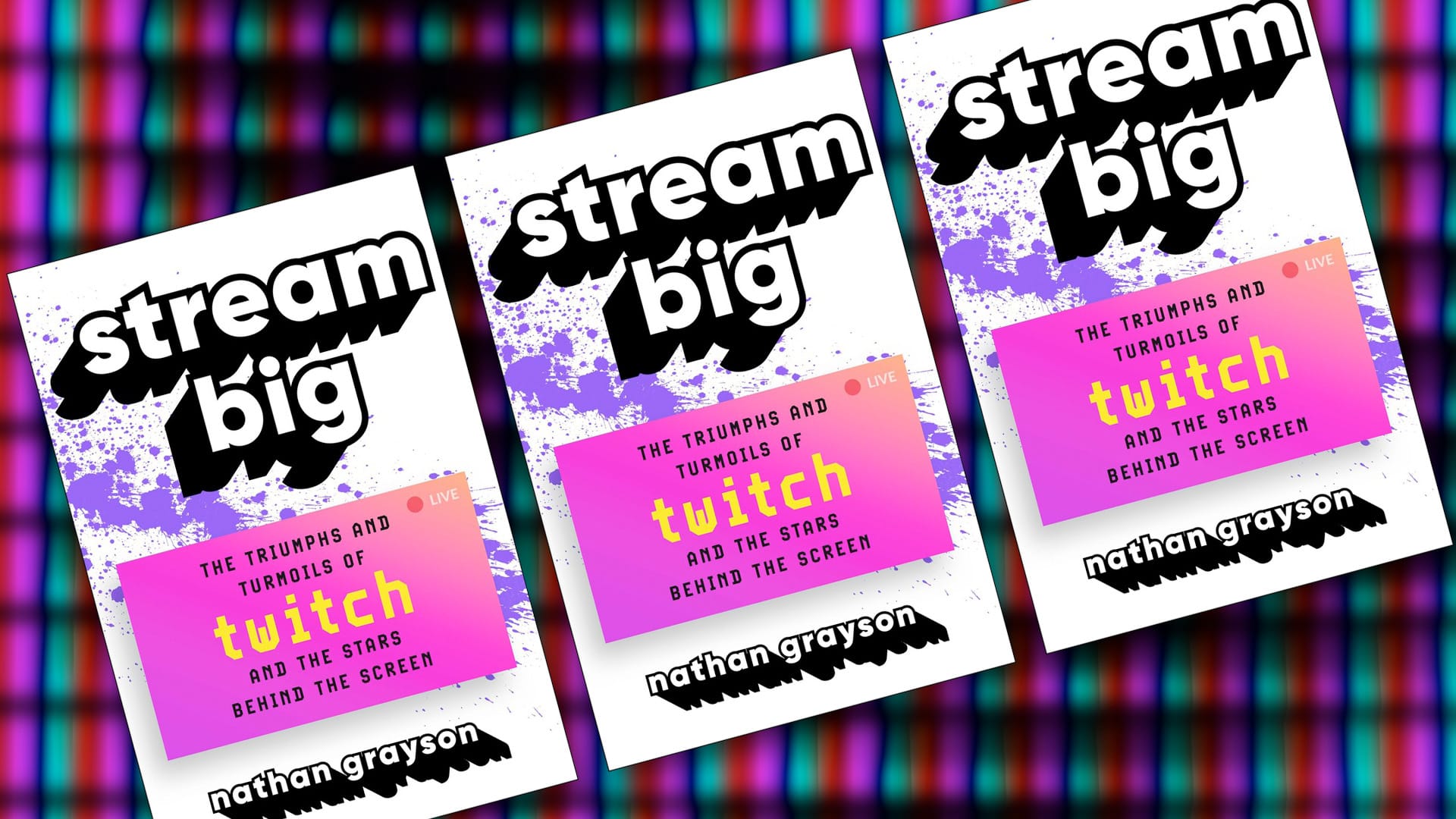
Nathan Grayson's new book, Stream Big (Astra Books/2025), is a detailed and insightful look at the rise, fall, and future of Twitch, told through ongoing conversations between Grayson, nine prominent Twitch streamers, and many others who supported and engaged with the Twitch community over the past five or so years.
So, why Twitch? Why now? And what's next for a site that seemed like it was about to take over all of pop culture? The answer, as Stream Big reveals, is complicated.
"As someone who's been covering games for a long time," Grayson explained when I spoke to him via Zoom for this piece, "Twitch felt like the future of observing the medium, or at least the way people would engage with the medium outside of directly playing games—and especially where the culture around video games was headed."
It's important, Grayson said, to check our biases, and, especially in journalism, seek understanding of the things that don't currently fit into our understanding of a culture or industry. Because it's easy to look at Twitch and think "Oh, what's this thing over here? Who cares? That's just for kids."
"Your responsibility as a reporter is to be on top of things, and to understand why people are doing what they're doing," Grayson said, explaining why he tackled Twitch in his book. "If you look at something like Twitch and say, 'Oh, I don't get it. Why would somebody watch somebody else play a video game instead of just playing it themselves?' that's not where you should stop. Instead, you should say, 'I want to understand. If I was a little big younger, why would this appeal to me?
"That was the starting point."
 Courtesy of the Author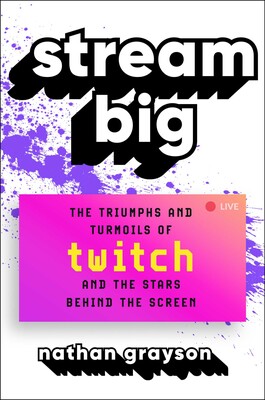
Grayson's voice is subtle throughout the story as he dons his reporter's hat, taking a back seat to the people he's writing about. But when he does bubble to the surface it's thoughtful and perceptive, picking out small details about his subjects, and contextualizing their greater lives—their "real" lives—against their online personas. He does this from their homes and workplaces, where he spent hours and hours conducting interviews over several years, over the phone, and, of course, digitally. No matter how Grayson spoke with his subject, he allows their voice and experience to pour through and shape the story.
And when you're reporting on personalities as big as Kaitlyn "Amouranth" Siragusa, Tanya "cypheroftyr" DePass, and Emme "negaoryx" Montgomery, it's best to stay out of the way and listen. They've seen it all, and their personal journeys reflect that of the industry they've been leading.
Bleed Purple
" When Twitch first started, one of the smart things they did is embed themselves in the nascent streaming and esports communities," Grayson explained. Twitch employees went to a lot of streaming-related events, they put in a lot of face time, and they threw notoriously rowdy and exclusive parties—helping Twitch creators feel like they were on the inside with something special. "[Twitch staff] made the human connection element of it very apparent," Grayson said. Not just by putting faces in front of cameras, but by helping creators understand the people behind the company were real people, too. People who were there to help. People who loved streaming and believed in its future.
Stream Big's early pages paint a picture of a scrappy company—an offshoot of a larger, more general purpose streaming company called Justin.tv—filled with people who loved streaming—many streamers themselves—exploring new ground and pushing boundaries in a way that excited as many people as it confused. Maintaining that culture of putting creators first—and recognizing the very real humans behind the successful digital personas—was a major mandate at all levels of the company, and it helped them attract top-tier talent.
Shrewdly, Grayson chooses not to tell a dry, chronological history of Twitch, instead turning his attention to the stories of nine high profile streamers who, through their own personal turmoil, success, and futuregazing, reveal the story of a corporation that started off small and well intentioned, but hit troubled waters as operations (and fiscal goals) scaled out of reach. A familiar story for those who spoke with Grayson.
Years before the pandemic boom, Twitch made waves with its sale to Amazon, after which, backed by Amazon cash, it rapidly scaled up. "They went from a couple hundred employees to almost doubling within a year," Grayson explained. "When you do that kind of thing, on one hand you have access to all these new resources, but on the other hand, it's impossible not to lose some of the culture you had before."
But, still, Amazon was willing to "take a risk" on Twitch for a while, according to Grayson, and encouraged them to experiment with new products, expand in new directions, and just sort of see what stuck. They didn't care that Twitch wasn't profitable.
At first.
But, then "a lot of years passed," and by 2020, with the pandemic brewing and streaming taking up a bigger and bigger slice of the pie as people tried to fill their days stuck at home, Amazon started calling in its bills. "They were like, 'Hey, yeah, we need you to start generating a profit,'" Grayson said. "'We didn't buy you for nothing.'"
The platform was growing faster than it ever had during, but even pandemic levels of growth wasn't enough to bring Twitch to profitability. Streaming as a technology has a paradoxical problem scaling up because the more bandwidth you use, the more it costs, and even Amazon's massive infrastructure advantage isn't able to solve that. As the world opened up and people started regaining their old activities and routines, it's "been a gradual downslope [for Twitch] ever since."
Despite exceeding expectations for that period, this inability to satisfy Amazon's profitability goals led them to do what Grayson described as the "classic thing" a lot of companies do nowadays: "cut their way to profitability."
That meant major layoffs, and an increase in ads on the platform, without the consent of the creators who were actually providing the value to the people paying the bills. Amazon, through Twitch leadership, chose these over other means of achieving profit via features that creators would've embraced, said Grayson, because they would've taken longer to turn a profit directly.
Grayson's an experienced reporter with work in Washington Post, Kotaku, and Vice, and it shows in his strong understanding of how to blend micro-level storytelling to make a compelling macro-level point about the cost of streaming on its creators. He's now one of five co-owners of Aftermath, a worker-owned games media site that sprung from the ashes of the collapsing traditional games media, and understands the personal cost of grinding away to stay relevant. So, with his nose deep in the beat, Grayson turns his attention to the creators themselves, and Stream Big reveals itself as nine independent chapters, each focused around an interview with a popular streamer. These smaller stories piece together to reveal the parallel struggles between the creators and the company as they juggle resources and time, trying to find a balance that's sustainable, healthy, and allows them to do their best work.
One way street
A big part of the success behind modern streaming are the strong relationships streamers build with their audience. There's a direct line between streaming communities and the rise of personality-based games journalism, which started in the '80s and '90s before coming to a head in the '00s with websites like 1UP.com, and continuing to worker-owned sites like Aftermath. Fans, whether they're watching someone stream, reading their favourite magazine, or tuning into the latest episode of their favourite podcast, fans come to trust these creators more than members of traditional media outlets.
A major theme supporting Stream Big, something that comes up in almost every chapter, is the double-edged nature of the titanium connection between fans and creators. Sure, it leads to tremendously loyal fanbases, but it's also often responsible for the toxic, often vicious, and sometimes violent, conflict faced by streamers on a near daily basis.
The concept of a "parasocial relationship," Grayson explained, exists when there are two parties, a streamer and a fan, but the relationship exists in an outsized manner in one direction. "In a parasocial relationship, a fan will often conceive of themselves as being effectively friends with the streamer," he said. This is in part because they watch so much of the streamer's content that they've come to know the their tastes, tics, habits, and routines. "But, our brains didn't really evolve to handle this kind of dynamic. And, so, you really do, as a viewer, get this idea you're getting a full look at [the streamer's] daily life."
It's particularly fraught for streamers, said Grayson, because they spend "disproportionately more time in front of their audiences than somebody making YouTube videos or TikToks, and so it's much easier to come away with this idea of like, 'Yes, I know this person because I spend eight hours per day with them.'"
As Grayson points out, that's more time than most people spend with anybody in their lives. "The crux of a parasocial relationship is that for the person viewing, this is everything." Everything that happens in that browser window and chat represents the totality of a one-on-one relationship between the fan and the streamer, but, for the streamer, they often have no idea the fan exists as anything other than one of thousands (or more) of other fans—colloquially referred to as "chat" by many streamers—engaging with their content at any given time. "They have no direct connection to you aside from maybe responding to you in chat a handful of times or talking to you on Discord every once in a while."
Streamers want their fans to feel special, and they put enormous amounts of effort into being available and on stream, highlighting their most charismatic attributes (as Grayson puts it in the book) to appeal to an audience that's big and loyal enough to help them pay the bills. But, it's also becoming clear this dynamic is not so much a widening boulevard, but a narrow tightrope constantly swaying in the wind. Finding the balance between availability and sustainability is key to surviving as a Twitch streamer, and is likely the biggest question the company has moving forward. How can it protect its stars not just from typical workplace issues like burnout, but from the unprecedented, sometimes dangerous, connections to fans who fall into the trap of parasocial relationships.
"This is a form of labour," Grayson told me, "and it should be viewed as such."
He warns about the danger of looking at the most successful streamers and seeing someone living what appears to be a cushy lifestyle or easy job. "Like, no, it's still work," he said. "I'm very labour-focused in the way I view the world, and so I think even if you're talking about somebody who's making potentially millions on Twitch, we are still all in this together when it comes to us versus these big companies that want to exploit our labour while giving us as little as possible in return."
Dream Big
Grayson wants readers to walk away understanding that on either side of Twitch—the creators and the fans—are real people, and to see what they gain from the relationships and experiences facilitated by a company that's gradually emphasized profit over people. "The perspective reader of my book has a lot more is a lot more similar to [any of the streamers] in the book than they are different," Grayson said. "I think a lot of people use streaming to address things like loneliness and the need for community in general."
With all the changes coming fast to this world, labour exploitation is a vitally important issue, and Stream Big is a livestream look into one of the industries where the health and future sustainability of its stars (not to mention the thousands of people out there working just as hard to perform for their audiences that number in the dozens, or even single digits) is hanging precariously in the balance. An industry where the pressure to perform for your bread is astronomical, but the riches that wait for those who perform the best, the longest, the loudest, and the luckiest, are beyond imagining.
What connects all the streamers in his book? "Their ability to maintain a community," Grayson said. "That's the essence of Twitch."
If you ask a random person who's not heavily invested in streaming what the main appeal is, they're likely to say it's about watching someone play a video game. But, Grayson said, that's a surface level read on what makes Twitch so compelling to millions of people worldwide. "That's not really why people stick around," he said. They stick around because successful Twitch streamers are really good at engaging with their fans.
He likens Twitch chat—the dedicated fans watching live who comment voraciously, hoping to be noticed—to a singular character assembled from the sum of its parts. In a way, a Twitch stream turns into a one-on-one conversation between two people: the streamer and "chat."
"[These streamers] don't need another person," Grayson said. "The other person's already there and it's potentially thousands of people."
With Grayson's honed reporting and precise understanding of how to pull human stories out of large cultural moments, Stream Big offers a compelling, vividly realized look at the people behind the screen, offering a close cutting examination of the trials, tribulations, and stunning heights of streaming stardom, and the drive to use videogames as a medium to build communities of hundreds or thousands of like-minded fans.
Grayson warns, though, that the word "community" is appropriated by companies and people who've never actually built a people-first community. "I think community is a lot of things," he said, "and I hope this book demonstrates what an actual community looks like versus maybe just somebody saying like, 'Oh man, I love my community so much. I don't take any responsibility for them, but, you know, they mean the world to me.'
"And it's like, if you won't take responsibility for it, then what the fuck are you talking about?"
This interview was edited for length and clarity.
Support
There are lots of ways to support Astrolabe and my other work. Check ‘em out!
Keep In Touch
Enjoy Astrolabe? Want more SFF and retro gaming goodies? You can find me on Bluesky and my website.
Credits
Astrolabe banner photo by Shot by Cerqueira on Unsplash